Case Study Summary

Project Scope: Contributed to the brand, UI, and marketing development of Rinset, a home-laundry gadget designed to simplify washing delicates and everyday items without a full machine cycle.

Role & Responsibilities: Supported the overall design direction, created instructional onboarding screens, assisted with packaging layout, and designed various UI states (e.g., toggles, dropdowns, and selected states) to guide developers toward a clear, consistent interface.

Design Approach: Focused on clarity and ease of use by researching top laundromat-reliant U.S. markets, analyzing home-laundry search keywords, and creating user/buyer personas to shape both the product experience and marketing strategy. Prioritized simple instructions, visual cues, and minimal steps to help users set up and use the product confidently.

Impact & Goal: Delivered a clean, instructional, user-friendly experience—supported by ads, social media templates, and packaging—that increased user understanding and product credibility. The goal was to create a product that felt approachable, problem-solving, and easy to integrate into everyday routines.

Limitations: I was unable to conduct formal usability testing due to project constraints, and I no longer have access to the files containing the responsive design variations.

Overview

The Project

What is Rinset Laundry?

Rinset is a smart laundry timer that connects to your phone and notifies you when your washing or drying cycle is complete, helping prevent forgotten loads, rewashing, and odor build-up. By reducing wasted time, water, and electricity, Rinset supports both convenience and sustainability.

The Project

What is Rinset Laundry?

Rinset is a smart laundry timer that connects to your phone and notifies you when your washing or drying cycle is complete, helping prevent forgotten loads, rewashing, and odor build-up. By reducing wasted time, water, and electricity, Rinset supports both convenience and sustainability.

My Role

I joined the project after the initial concept, website, and brand direction were created. My role focused on elevating the product into a more market-ready solution by designing the mobile interface aligned with the existing brand, researching user needs, and developing packaging and marketing assets to support real-world adoption. I also created ad materials and explored go-to-market opportunities to help position the product as a viable, user-focused offering.

Problem/
Solution

Problem

Users often forget laundry in the washer or dryer, leading to odor, rewashing, wasted energy, and frustration. While an early concept and brand existed, the product lacked a defined user experience, clear value messaging, and a path to real-world adoption. The challenge was not only to design an intuitive interface for the smart timer but to shape how users would understand, trust, and integrate the product into their daily routine — effectively bridging the gap between prototype and sellable, user-ready product.

Solution

I expanded the early concept into a market-aligned experience by:

  • Designing a clean, intuitive mobile interface aligned with the existing brand
  • Conducting lightweight research to identify pain points and positioning angles
  • Creating packaging that communicated value, instructions, and brand personality
  • Developing marketing materials and ad assets to test desirability and messaging
  • Exploring go-to-market considerations to support early customer validation

Research

To better understand the target audience and inform the app’s design, I conducted secondary research on e-book usage, summary app trends, and audio learning habits. This research helped me identify user behaviors, preferences, and pain points:

Impact & Behaviour of Laundry Use

Problem

Laundry is easy to start but hard to finish.

Behaviour

According to a LG-sponsored survey in Canada, about 1 in 3 Canadians leave laundry in the washing machine or dryer for an extended period because they forget about it. (Newswire 2022)

Impact

Rewashing can waste 0.9K–10.5K litres of water per household per year. (Energy Star 2021)

Statistics presented in this case study were gathered from public data sources and industry reports, then calculated to reflect the typical user behavior and context relevant to this UX project.

Marketing Research for Laundry Users

I researched which U.S. states rely most on laundromats—using renter density and metro lifestyle data—and identified New York, California, and Texas as key markets to focus our positioning and launch strategy.

I also analyzed high-intent keywords—such as ‘laundry gadgets’ and ‘home laundry hacks’—to understand what users were searching for and to shape our messaging and ad targeting

Research

To better understand the target audience and inform the app’s design, I conducted secondary research on e-book usage, summary app trends, and audio learning habits. This research helped me identify user behaviors, preferences, and pain points:

Impact & Behaviour of Laundry Use

Problem

Laundry is easy to start but hard to finish.

Behaviour

According to a LG-sponsored survey in Canada, about 1 in 3 Canadians leave laundry in the washing machine or dryer for an extended period because they forget about it. (Newswire 2022)

Impact

Rewashing can waste 0.9K–10.5K litres of water per household per year. (Energy Star 2021)

Statistics presented in this case study were gathered from public data sources and industry reports, then calculated to reflect the typical user behavior and context relevant to this UX project.

Marketing Research for Laundry Users

I researched which U.S. states rely most on laundromats—using renter density and metro lifestyle data—and identified New York, California, and Texas as key markets to focus our positioning and launch strategy.

I also analyzed high-intent keywords—such as ‘laundry gadgets’ and ‘home laundry hacks’—to understand what users were searching for and to shape our messaging and ad targeting

User/Buyer Personas

To guide the UI design and marketing strategy, we created 5 user/buyer personas representing key target segments:
  1. Tech Terry – junior programmer; busy, no laundry setup.

  2. Explorer Erin – traveler; frequently steps away from laundry.

  3. Mommy Macy – multitasking parent; laundry in basement, distracted by chores/childcare.

  4. Larry Laundromat – laundromat owner; 40–60 machines, wants efficiency and to beat competitors.

  5. Sally Student – school laundry user; studies or runs errands while laundry runs.

Purpose:

  • UI Design: Understand behaviors and pain points to make the interface intuitive and actionable.

  • Marketing: Identify messaging that resonates with each segment, e.g., reminders for busy users, efficiency for laundromat owners.

Limitations

Due to experience level and project constraints, formal usability testing and competitive analysis were not conducted. Research focused instead on environmental context, user behavior patterns, and real-world laundry pain points.

Design Process

Color & Typography

#17cfb5 
Main Color 1
#2293c8
Main Color 2
#ff7a1c
Button/Accent
#515151
Secondary Color 1 

#17cfb5
Secondary Color 2

#767676
Background Color

#17cfb5 
Main Color 1
#2293c8
Main Color 2
#ff7a1c
Button/Accent
#515151
Secondary Color 1 

#17cfb5
Secondary Color 2

#767676
Background Color

For Color & Typography, I focused on applying the existing brand guidelines consistently across the interface and ensuring they supported accessibility, hierarchy, and clarity.

Wireframe sketches

In my early sketches I laid out the three main screens I would need. 

User Flow Map & Components

Onboarding Flow Map

I developed a user flow to outline the complete interaction path, from onboarding to setting a timer and going to the main pages. This clarified the user’s process end-to-end and guided the structure of the screens during design.

Design Decisions

Key Decision #1 - Prioritized clarity and simplicity

Users needed to understand how to set the timer at a glance, so I kept layouts minimal, used clear labels, and selected typography that improved readability. 

Key Decision #2 - Highlighted primary actions

The main timer button was made more prominent to reduce friction and ensure users could start or adjust a cycle quickly, especially in busy environments like laundromats or shared spaces.

Key Decision #3 - Used color intentionally for guidance

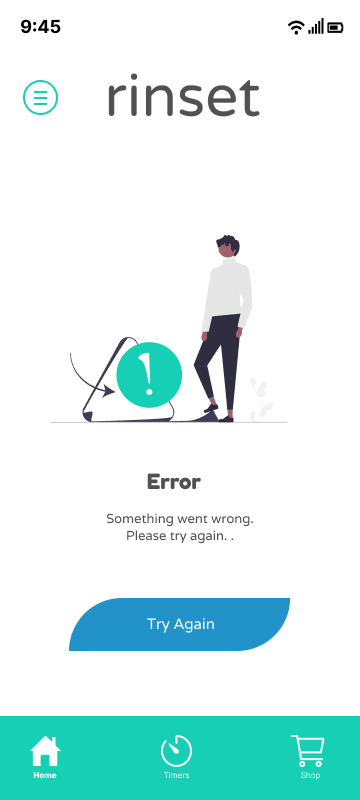
Color choices were based on signaling states—active, inactive, and error—so users always understood what the system was doing without needing extra explanation.

Key Decision #4 - Designed for quick onboarding

Instructional screens were added to guide users through initial setup, ensuring that even first-time users could understand how the product works immediately.

Key Decisions #5 - Made component states for development

I created screens showing toggled/untoggled buttons, open and selected dropdowns, and active timers to ensure accurate implementation and reduce ambiguity during handoff.

Final Results

To support smooth development, I designed screens that documented various component states: toggled/untoggled buttons, dropdown menus in both open and selected states, and active vs. inactive timers. These references ensured consistent behavior and reduced ambiguity during implementation.

Note: These screens were created in both light and dark modes using Figma tokens to enhance accessibility and user experience. However, it cannot be displayed due to technical limitations.

Marketing

To introduce the product and demonstrate its value, we created short instructional ads on YouTube showing how the automated laundry timer works. The ads focused on our target audience — busy North American households and laundromat users — and their relatable pain points: forgetting laundry, rewashing, wasting water, and waiting around laundromats for laundry to finish. The solution was highlighted clearly: with a reminder, users don’t have to wait or worry. The instructional format helped our audience immediately understand how the product works.


Rinset | Automatic Laundry Timer | Fresh Laundry Always 🧺​

2.2K views • 3 years ago

Rinset | Automated Laundry Timer | Horsing Around at the Laundromat 🧺

5.8K views • 3 years ago

The campaign reached a wide audience, generating significant engagement and translating directly into results: we consistently achieved 6–7 sales per week while also receiving positive user feedback. I also ran a Facebook ad campaign structured around a simple marketing funnel — Awareness, Consideration, and Conversion — to gradually introduce the product, educate users, and drive purchases. Together, these efforts showed that clear, problem-focused messaging aligned with strong UX principles can effectively drive both understanding and conversion.

Marketing Assets

To support early sales and build awareness, I designed a range of marketing materials across multiple platforms. This included Amazon and Facebook ad creatives that highlighted the product’s core benefits, as well as social media carousel templates styled like mini blog posts to educate users and drive engagement. Together, these assets helped communicate the product’s value clearly and consistently across channels.

Packaging

I designed a simple two-sided postcard-style manual: the front introduced the product visually, and the back provided quick step-by-step instructions. The Laundry  tags were included so users could attach them to their own machines. The entire package fit neatly into a standard envelope for easy mailing and distribution.

Packaging

I designed a simple two-sided postcard-style manual: the front introduced the product visually, and the back provided quick step-by-step instructions. The Laundry  tags were included so users could attach them to their own machines. The entire package fit neatly into a standard envelope for easy mailing and distribution.

Thank you for exploring, lets bring ideas to life